Image: Destination image
DESTINATION / NEW ZEALAND
Jacques Cousteau's top 10 dive site - arches, caves, and subtropical currents
Image: Destination image
Visibility
25m
Water Temp
18C
Max Depth
40m
Current
Moderate
Difficulty
Intermediate
Best Season
Jan-Feb-Mar-Apr-May
Certification
advanced open water
Budget
$$ Mid-Range
Sharks
Manta Rays
Whale Sharks
Turtles
Coral
Macro
Pelagics
Dolphins
Depth: 5-25m | Intermediate
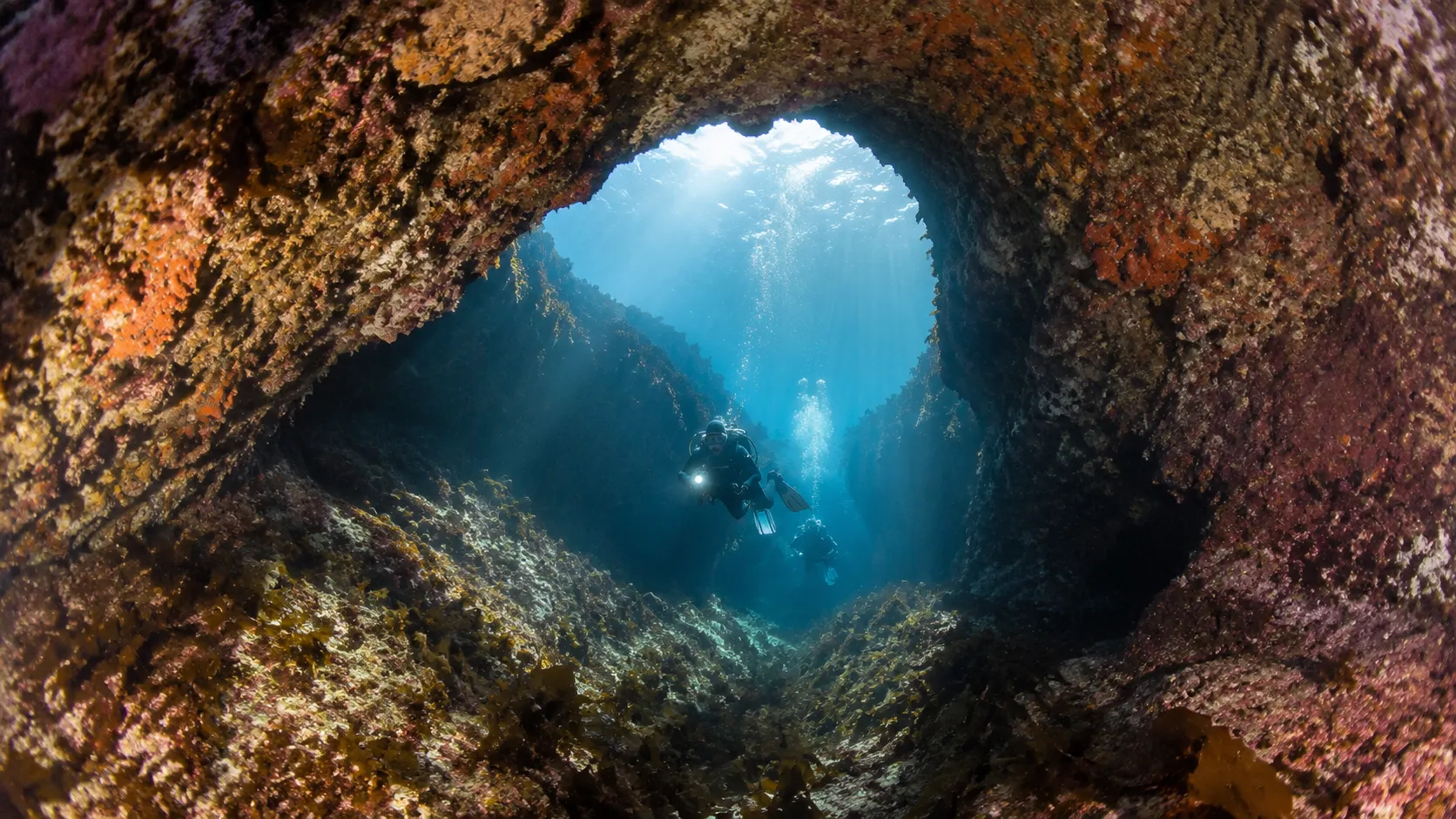
One of the world's largest sea caves, where light filters through holes in the ceiling as vast schools of blue maomao sweep through.
Massive sea cave, blue maomao, light effects, moray eels
Depth: 15-35m | Advanced
A dramatic underwater arch formation where short-tail stingrays gather seasonally and bronze whaler sharks patrol the deeper waters.
Stingray gatherings, bronze whalers, dramatic topography
Subtropical diving off New Zealand's North Island — no coral at all, but a riot of color from sponges, bryozoans, and anemones in electric orange, pink, and purple. The archways at Northern Arch are cathedral-like, with shafts of light piercing the gloom and short-tail stingrays stacked on the sandy floor. February water is a brisk 20°C, needing a 7mm suit. The resident school of blue maomao at the namesake arch is mesmerizing — thousands of fish moving as one organism. Not a tropical postcard, but unforgettable and worth the journey.
Best months: Jan, Feb, Mar, Apr, May. Peak: Feb-Mar. Water: 15-22C.
advanced open water certification recommended. Minimum 15+ dives.
$150/day average. mid_range tier. Liveaboard: not available.
Poor Knights Islands dives best from Jan, Feb, Mar, Apr, May, with the peak season running Feb to Mar. During these months you can expect the calmest seas, the clearest water, and the highest chance of encountering the marine life this destination is known for. Water temperature sits at 15-22C, so a 5mm wetsuit is recommended for the cooler water.
For divers who are flexible, the shoulder months just outside peak season offer nearly identical conditions at 20-30% lower prices and with far fewer boats on the water. The only periods to avoid are the wet or cyclone windows - check the seasonal calendar below and on the dive operator websites before locking in flights.
Visibility at Poor Knights Islands averages 25 meters, which ranks among the clearest dive destinations in its ocean. Early morning dives consistently deliver the best visibility and the most active marine life, which is why local operators schedule most boat departures before 9am.
Getting there: Fly into Whangarei (WRE). From the airport, dive operators and hotels usually arrange transfers - budget 30 minutes to several hours depending on whether your resort or liveaboard is based on the mainland, an offshore island, or a distant atoll.
Time and money: The local timezone is UTC+12. A day of guided diving averages $150 at this $$ Mid-Range tier destination. Liveaboard options are limited here, so plan day-boat dives around your accommodation.
Who this suits: With a Intermediate difficulty profile, a beginner-friendliness score of 2/5, and a minimum of 15 logged dives recommended, Poor Knights Islands is best suited to divers with some experience who are comfortable with its conditions. Consider it a dedicated diver destination rather than a family resort pick.